
Marmara Municipalities Union Highlights the Role of Local Governments in Climate Action at COP31
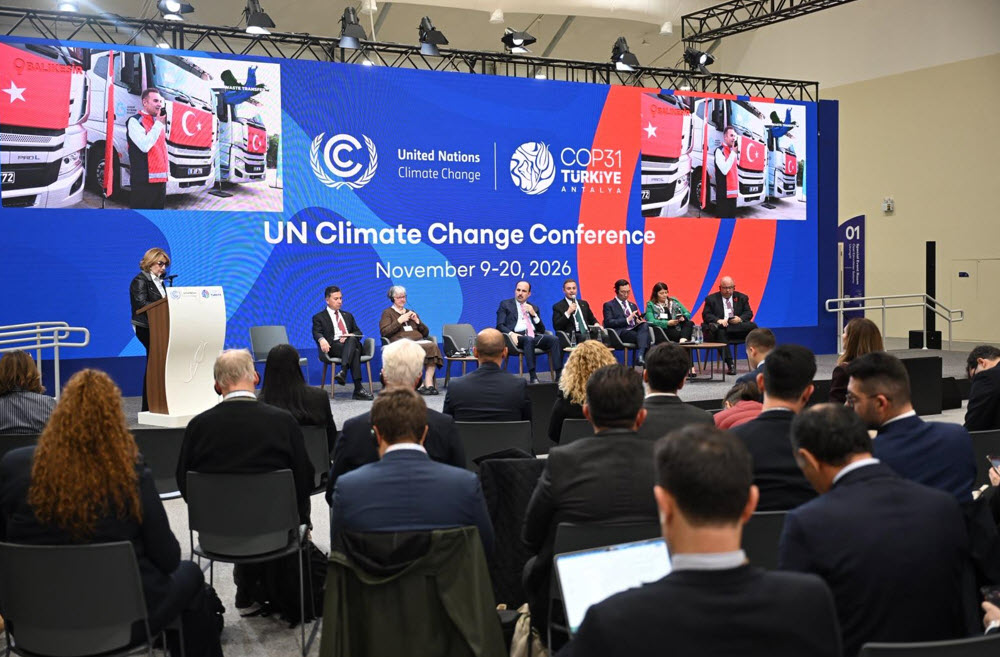
The sessions, which featured MMU President and Mayor of Balıkesir Metropolitan Municipality Ahmet Akın, MMU Secretary General M. Cemil Arslan and representatives of MMU's departments, addressed urban resilience, local climate action, climate finance, multilevel governance, just transition, sustainable food systems, caring cities and the protection of the Marmara Sea. A common message emerging from the discussions was that translating climate targets into action requires stronger institutional capacities for local governments, improved access to finance, evidence-based decision-making and coordinated action across all levels of government.
From Climate Targets to Concrete Action: The Role of Cities at COP31
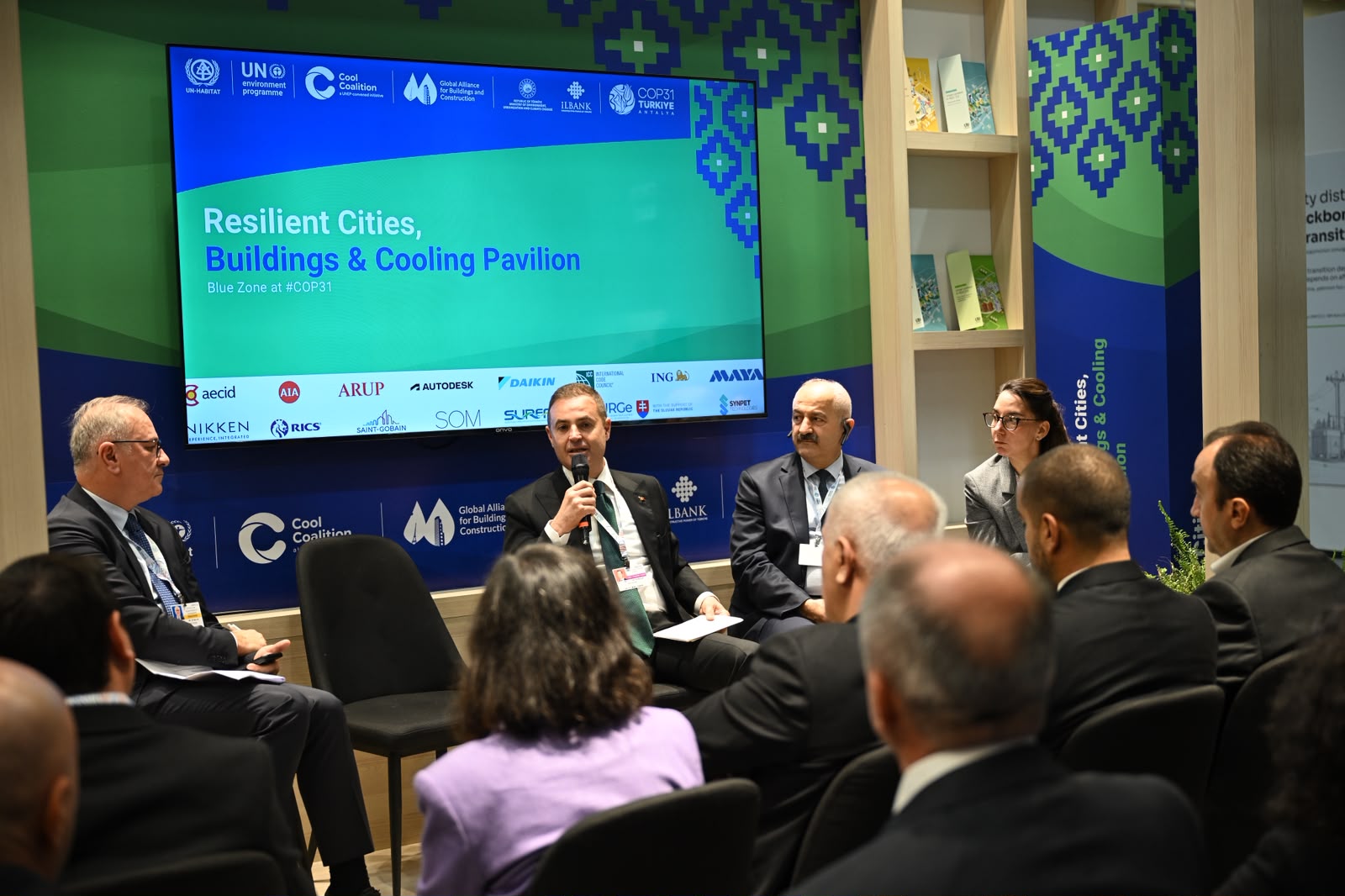
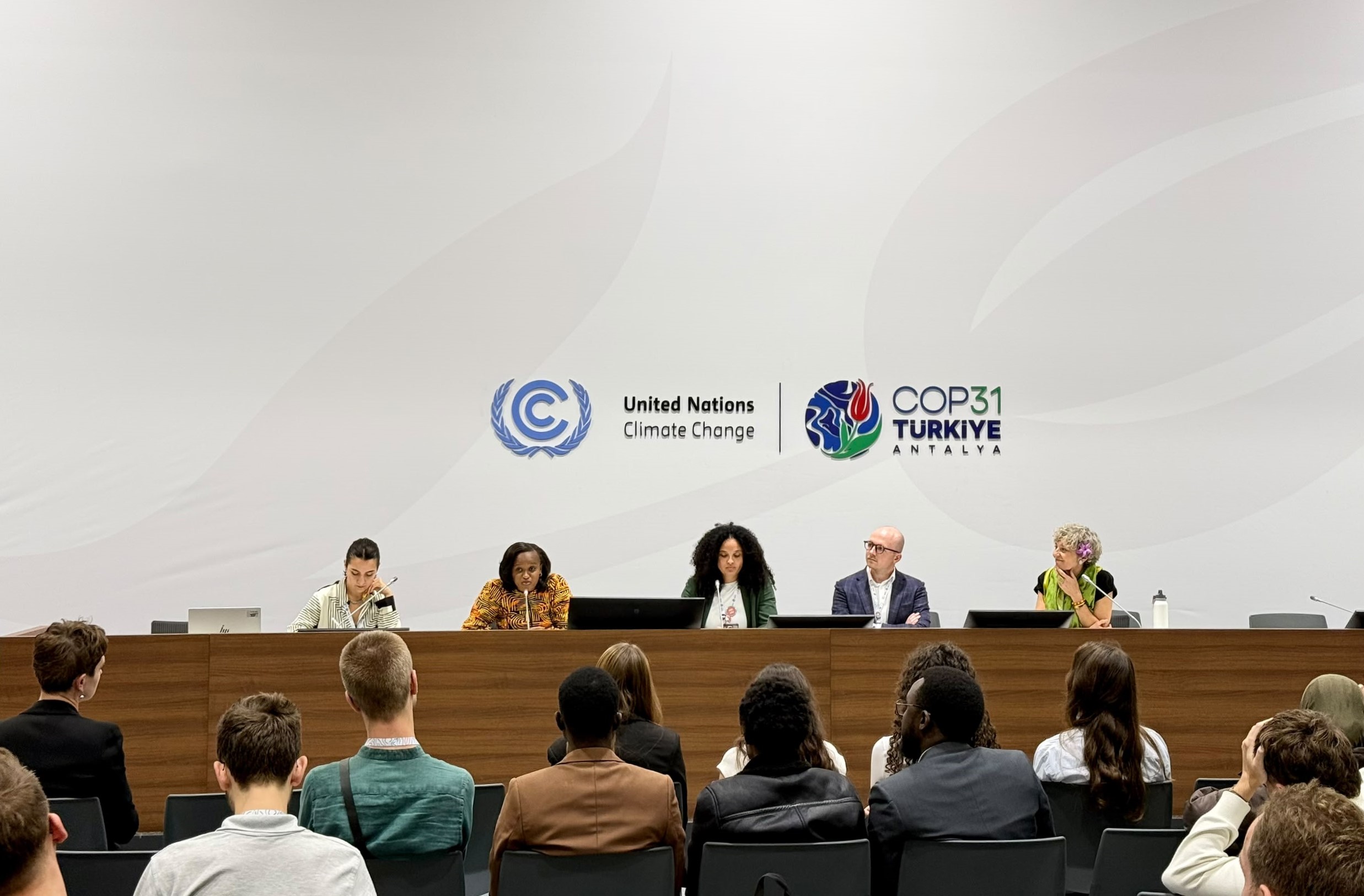
On 10 November, the session “Evidence-Based Urban Resilience: From Data and Planning to Climate Action” was organised in collaboration with CDP at the joint pavilion of İLBANK, UN-Habitat and the United Nations Environment Programme (UNEP) in the Blue Zone. Moderated by MMU Secretary General M. Cemil Arslan, the session brought together MMU President Ahmet Akın, Mayor of Gebze Zinnur Büyükgöz, ICLEI Director of Sustainable Finance Dr Meggan Spires and CDP Senior Manager for Cities, States and Regions Emilie Becault. The discussion explored how cities can translate their climate strategies into measurable, evidence-based actions and investment priorities.
MMU President and Mayor of Balıkesir Metropolitan Municipality Ahmet Akın emphasised that local action must begin with a clear understanding of local needs. He explained that, through its Sustainable Energy and Climate Action Plan (SECAP), Balıkesir aims to reduce greenhouse gas emissions by 40% by 2030 and achieve carbon neutrality by 2050. Stressing the importance of aligning climate targets with municipal strategic plans and investment programmes, as well as monitoring and reporting progress, Akın outlined MMU’s ongoing efforts through the Marmara Sea Action Plan, the Climate-Neutral Cities Network (İNŞA) and the Global Covenant of Mayors for Climate & Energy (GCoM). He also highlighted the Sustainable Urban Resilience Financing Facility (SURFF), developed under the leadership of İLBANK, as a significant opportunity for all municipalities to strengthen their institutional capacity and accelerate preparations for loan applications. Akın underlined the importance of translating Türkiye’s 2053 net-zero target into action at the local level.
Mayor of Gebze Zinnur Büyükgöz noted that climate change is no longer a future projection but a reality directly shaping cities’ planning and investment decisions today. He shared Gebze’s experience in developing its greenhouse gas inventory and Climate Change Action Plan since 2019.
Arslan emphasised that municipalities need not only finance but also technical assistance and institutional capacity to turn their climate targets into investment projects, and that this requires cooperation among local, national and international actors. While ICLEI’s Meggan Spires highlighted the importance of multilevel governance and collaboration, CDP’s Emilie Becault introduced CDP’s reporting system and underscored the role of data and risk assessments in local climate action.
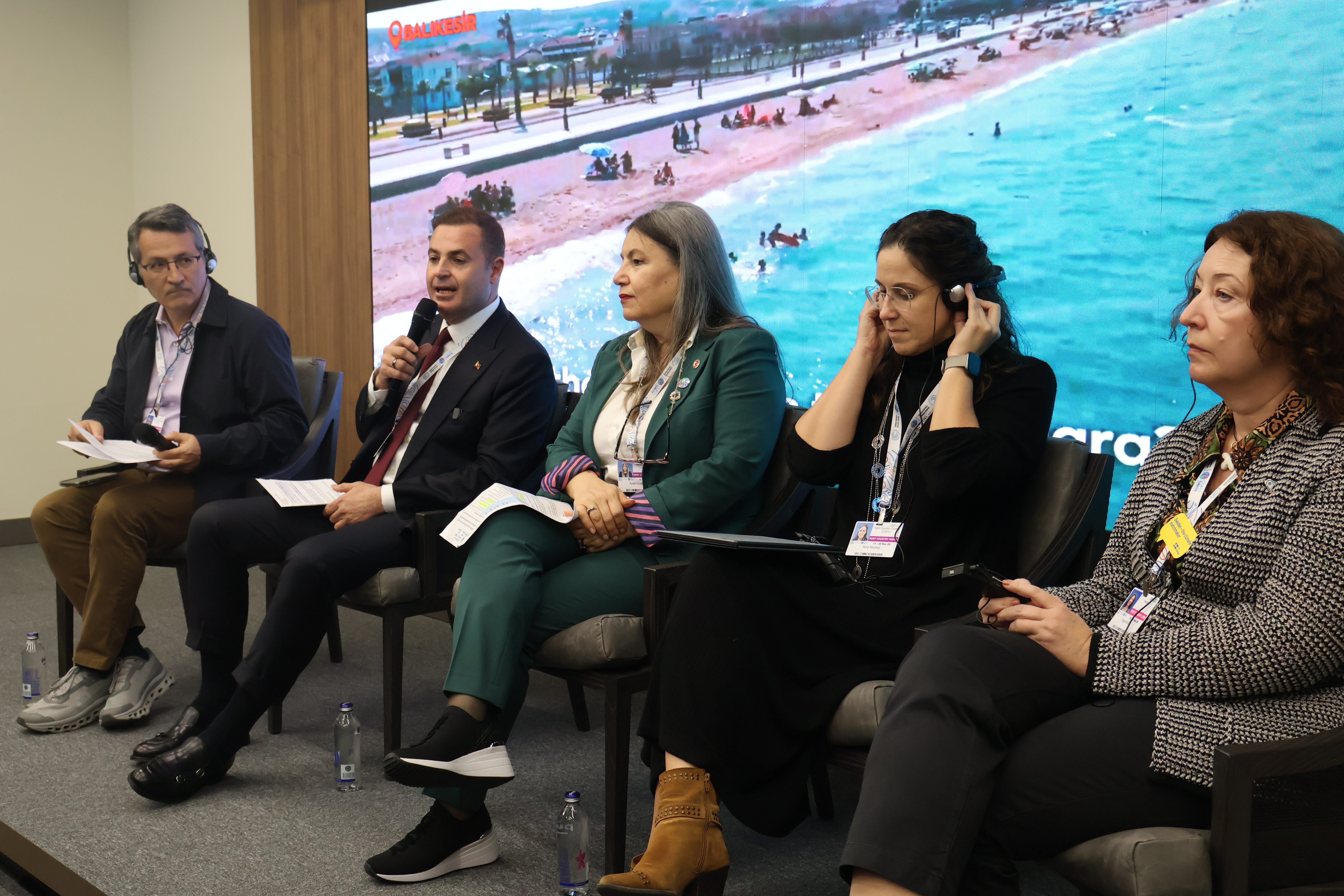
On 10 November, Ahmet Akın, MMU President, Mayor of Balıkesir Metropolitan Municipality and UCLG Climate Ambassador, also took part in the special session “International Cooperation for Local Climate Action and the 2030 Agenda”, organised by Konya Metropolitan Municipality and United Cities and Local Governments (UCLG).
Moderated by UCLG Secretary General Emilia Saiz, the session featured Uğur İbrahim Altay, COP31 Special Envoy for Cities and Local Governments, UCLG President and Mayor of Konya Metropolitan Municipality; Ahmet Aras, Mayor of Muğla Metropolitan Municipality; Aisen Nikolaev, Head of the Sakha Republic and UCLG Co-President; Fatiha El Moudni, Mayor of Rabat and UCLG Treasurer; Carola Gunnarsson, Councillor of Sala and UCLG Vice-President for Europe; Fatimetou Abdel Malick, President of the Nouakchott Region and Chair of the UCLG Standing Committee on Gender Equality; and Claudia Adasme Donoso, Mayor of Papudo. The speakers shared their experiences with participants.
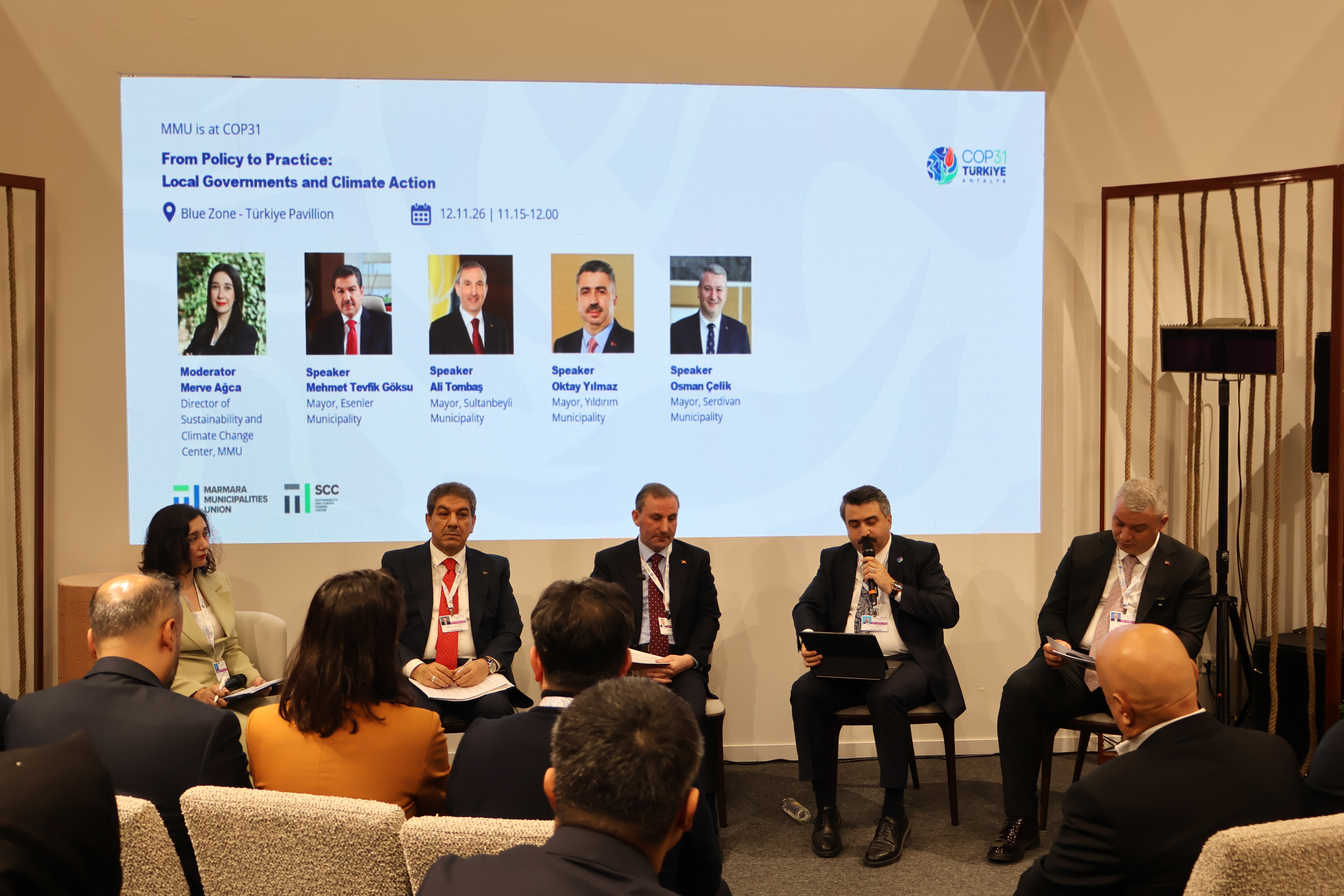
On 12 November, the session “From Policy to Practice: Local Governments and Climate Action” took place at the Türkiye Pavilion. Moderated by Merve Ağca, Director of MMU’s Sustainability and Climate Change Centre, the session brought together Mayor of Esenler Mehmet Tevfik Göksu, Mayor of Sultanbeyli Ali Tombaş, MMU Executive Committee Member and Mayor of Yıldırım Oktay Yılmaz, and Mayor of Serdivan Osman Çelik. The discussion focused on the role of local governments in climate adaptation, ongoing local initiatives and the needs of municipalities in accelerating climate action.
Ağca noted that local governments have been recognised as stakeholders in sustainable development since the 1992 Rio Earth Summit. Highlighting the importance of initiatives such as LGMA and CHAMP in ensuring local government representation and participation in decision-making processes, she explained that COP31’s focus on implementation had once again brought the role of local governments into sharp focus.
Mayor of Esenler Mehmet Tevfik Göksu stressed that addressing the climate crisis requires building a fairer world and shared Esenler’s local climate initiatives and zero-waste practices. Mayor of Sultanbeyli Ali Tombaş outlined the municipality’s target of reducing emissions by 55% by 2030 and introduced CLIMACARE, a project funded under Horizon Europe.
Mayor of Yıldırım Oktay Yılmaz highlighted the challenges municipalities face in accessing finance, developing technical capacity and ensuring interinstitutional coordination. He proposed a long-term climate finance mechanism accessible to small and medium-sized municipalities, alongside common data standards and shared pools of expertise. Mayor of Serdivan Osman Çelik presented the municipality’s work on electrification, water and ecosystems.
The discussion revealed that, despite differences in municipal scale, local governments share common needs in data, planning, institutional capacity and cooperation. The importance of just transition at the local level, nature-based solutions and climate justice at the global level was also emphasised.
Just Transition and Climate-Neutral Cities
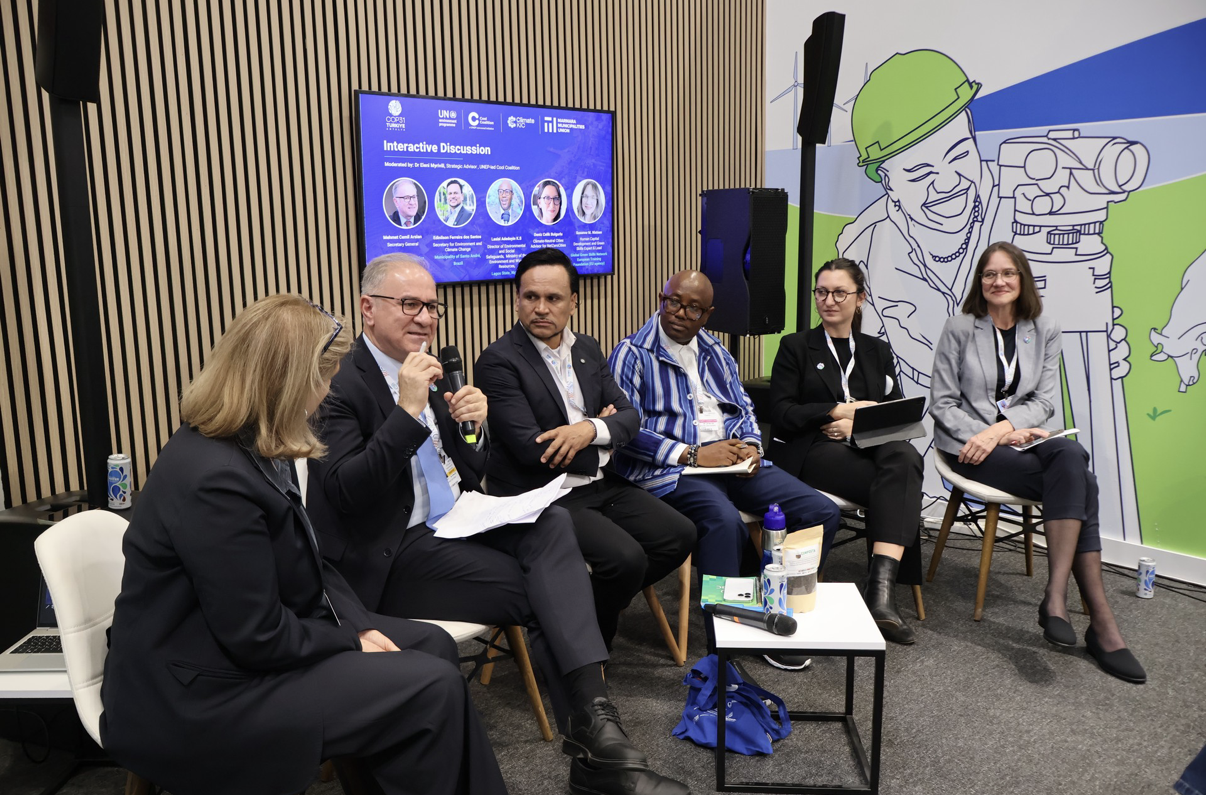
On 11 November, MMU Secretary General M. Cemil Arslan shared the experiences of municipalities in Türkiye in addressing extreme heat and energy poverty during the session “Building Fair and Resilient Cities: Local and Subnational Action on Heat, Housing and Just Transition”, organised in collaboration with MMU, UNEP and Climate KIC at the ILO’s Just Transition Pavilion.
During the session, moderated by UNEP Global Chief Heat Officer Eleni Myrivili, Arslan noted that Local Climate Action Plans are a starting point, with implementation remaining the key challenge. Highlighting the considerable differences in municipal capacities, he explained that MMU, representing more than 190 municipalities, acts as a bridge between local and central governments.
Arslan noted that the Climate-Neutral Cities Network (İNŞA), established within MMU, had brought together more than 200 participants from 55 municipalities in approximately one year. He also shared that the Reclaiming Strets programme had supported more than 30 municipal teams since 2022, facilitating interventions, including nature-based solutions, on more than 20 streets.
Referring to the outcomes of ECHO, a Horizon Europe project in which MMU is a partner, and AGROSHIELD, a project assessing agricultural drought risks in the Southern Marmara Basin, Arslan outlined five priorities emerging from İNŞA: treating climate data as public infrastructure, strengthening municipalities’ readiness to access finance, adopting a whole-of-municipality approach, tailoring support to the scale of each municipality and placing just transition at the heart of all efforts.
On 12 November, the session “Accelerating Local Climate Transition: How Do Countries Support Cities on Their Journey Towards Climate Neutrality?”, organised in collaboration with MMU and Climate KIC at the Türkiye Pavilion, explored the first year of the Climate-Neutral Cities Network (İNŞA) alongside representatives of national programmes in Austria and Sweden.
Moderated by NetZeroCities Programme Director Thomas Osdoba, the session featured MMU President and Mayor of Balıkesir Metropolitan Municipality Ahmet Akın, Dr Nina Mostegl, City Manager at the Salzburg Institute for Regional Planning and Housing, Olga Kordas, CHAMP representative and Programme Director of Sweden’s Viable Cities, and Prof. Dr Ayşen Erdinçler, Head of the Environmental Protection and Control Department at Istanbul Metropolitan Municipality.
MMU President and Mayor of Balıkesir Metropolitan Municipality Ahmet Akın explained that a nationwide call for participation had been launched in 2025, attracting more than 120 applications from 49 provinces. He noted that the needs identified among municipalities through İNŞA centred on climate data, climate finance and the green transition, and that training and capacity-building programmes, alongside mentoring sessions, had been developed in response.
Akın stated that the priority for the coming year was to move İNŞA from knowledge sharing to implementation, stressing the importance of tailoring support to the different scales of municipalities within national programmes.
Representing Istanbul Metropolitan Municipality, which participates in the programme as both a mission city and a pioneering city, Prof. Dr Ayşen Erdinçler highlighted Türkiye’s need for a permanent national cities programme that brings capacity building, finance and policy dialogue together under a single framework. She described İNŞA as a strong starting point for achieving this objective.
Mayors Call for Collective Action to Protect Marmara Sea
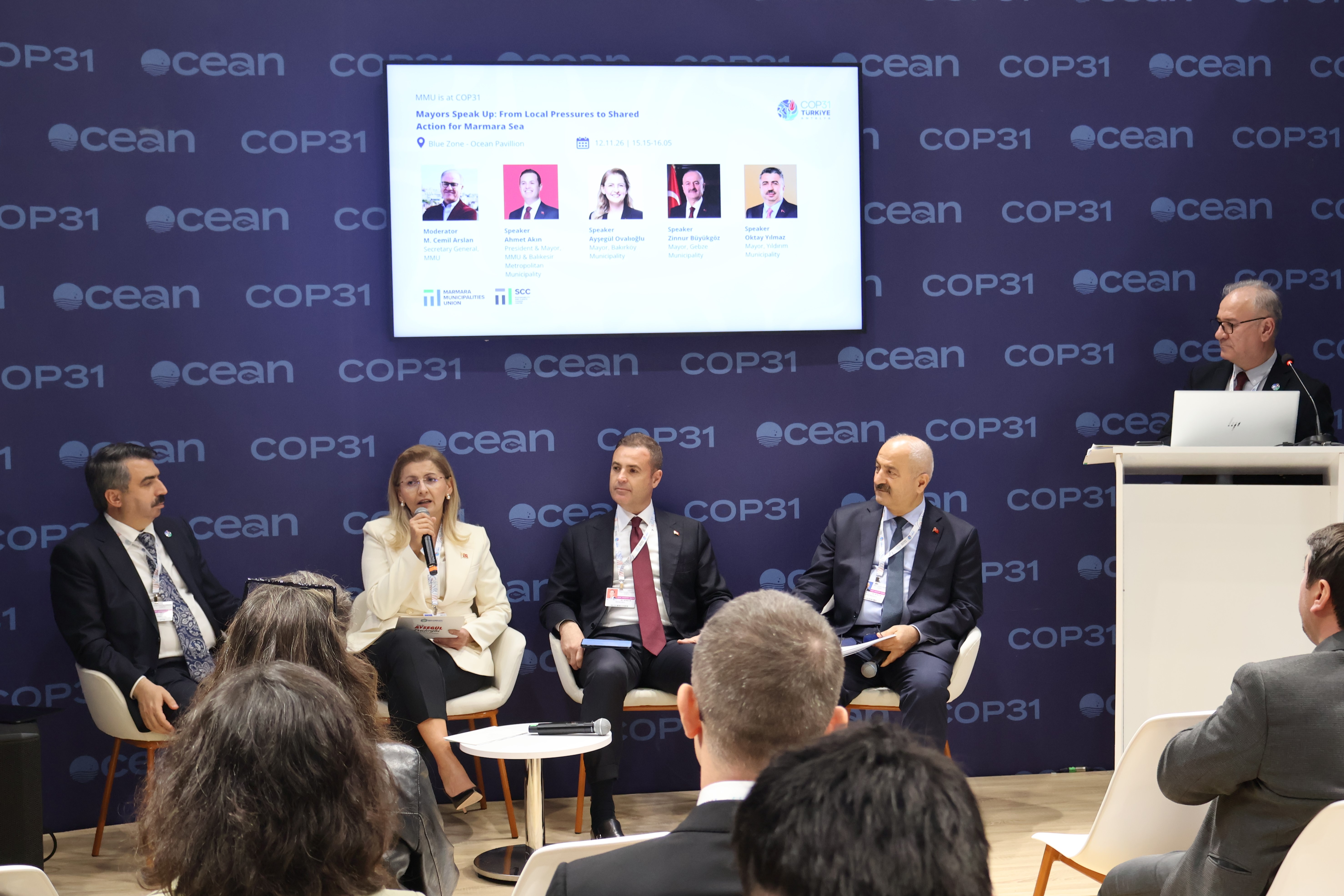
During the session “Mayors Speak Up: From Local Pressures to Shared Action for Marmara Sea”, organised by MMU at the Ocean Pavilion on 12 November, MMU President Ahmet Akın and MMU Executive Committee Members Mayor of Bakırköy Ayşegül Ovalıoğlu, Mayor of Gebze Zinnur Büyükgöz and Mayor of Yıldırım Oktay Yılmaz shared their experiences and ongoing efforts to protect the Marmara Sea. The session was moderated by MMU Secretary General M. Cemil Arslan.
Recalling that the protection of the Marmara Sea was the founding purpose of MMU, Arslan explained that the implementation of the Marmara Sea Action Plan, launched following the mucilage crisis in 2021, is monitored by MMU using data collected from municipalities.
Akın noted that 19 of the 22 actions outlined in the Action Plan had been completed and identified strengthening environmental infrastructure, protecting marine and coastal ecosystems, fostering cooperation and developing financing mechanisms as priorities for the coming period. Recalling that MMU had designated sea water temperature as the theme of Marmara Sea Day, celebrated on 8 June, to raise awareness of the impacts of climate change on marine ecosystems, Akın emphasised the importance of regional initiatives and cooperation.
Ayşegül Ovalıoğlu drew attention to overlapping responsibilities between central and local governments, proposing an integrated coastal management model and the establishment of coastal councils.
Zinnur Büyükgöz reported that 50,000 square metres of ghost nets had been recovered during surveys along the Gebze coastline and that 73% of the wastewater discharged into the sea in Kocaeli underwent advanced biological treatment. He called for the establishment of shared data and monitoring systems across institutions.
Oktay Yılmaz stressed that protecting the Marmara Sea is a shared responsibility across the entire basin and proposed establishing a joint environmental monitoring system for the Marmara Basin. Highlighting the importance of such efforts, he stated: “Protecting the environment comes at a cost, but the cost of failing to protect it is far greater.”
Food Systems and Caring Cities in the Green Zone
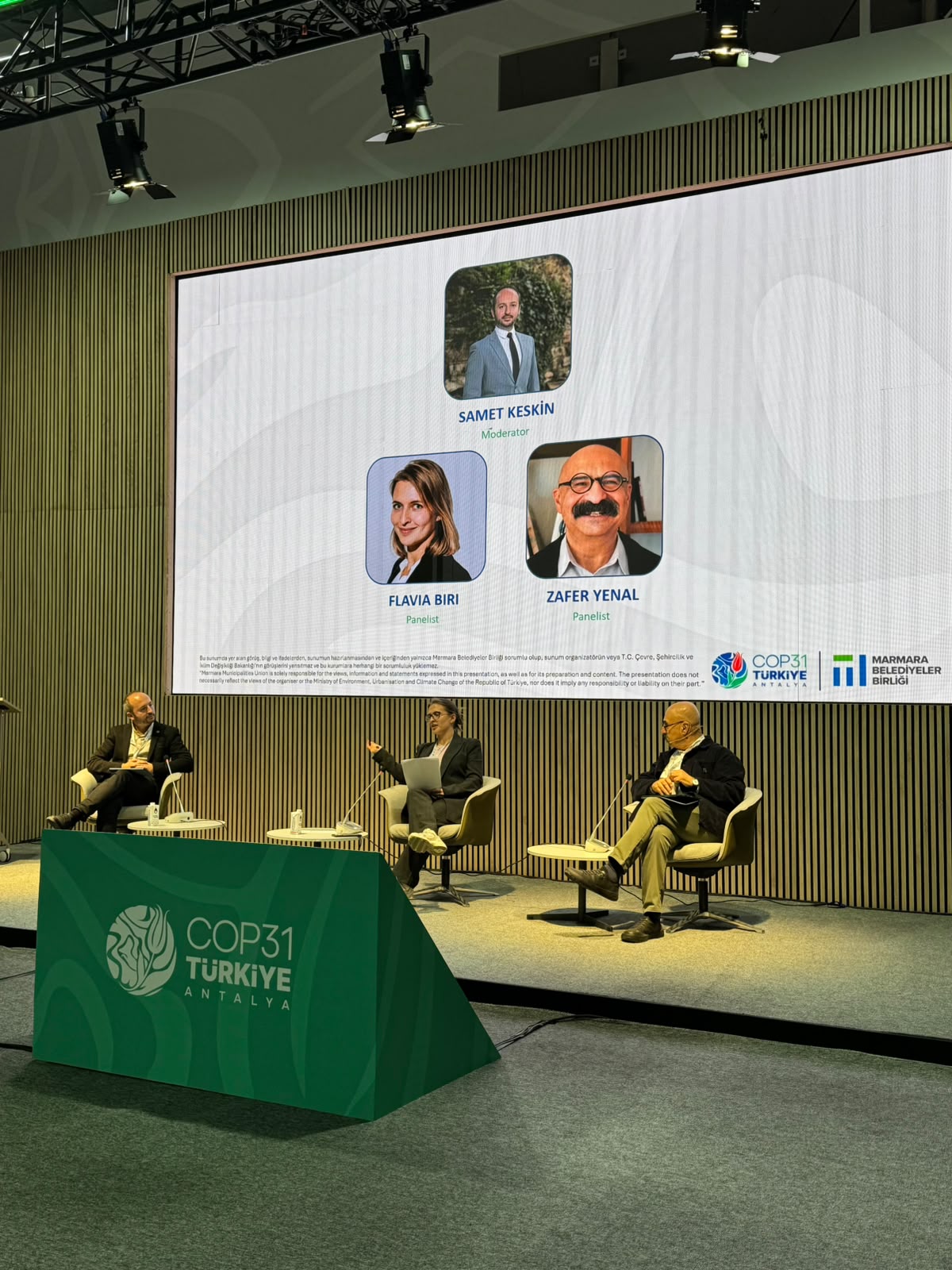
On 9 November, MMU organised the session “Resilient and Sustainable Food Systems” in the Green Zone, moderated by MMU Urban Planning Coordinator Samet Keskin. Featuring Flavia Biri, Zero Waste and Inclusion Project Manager at UN-Habitat, and Zafer Yenal, Coordinator of Sustainability and Food Security Studies at Sabancı University, the session emphasised that resilient food systems cannot be developed without addressing agriculture, cities, climate and social policies together.
The discussion explored urban–rural linkages, the ecological and economic pressures facing producers, generational renewal and food waste measurement, highlighting the importance of data in evidence-based policymaking.
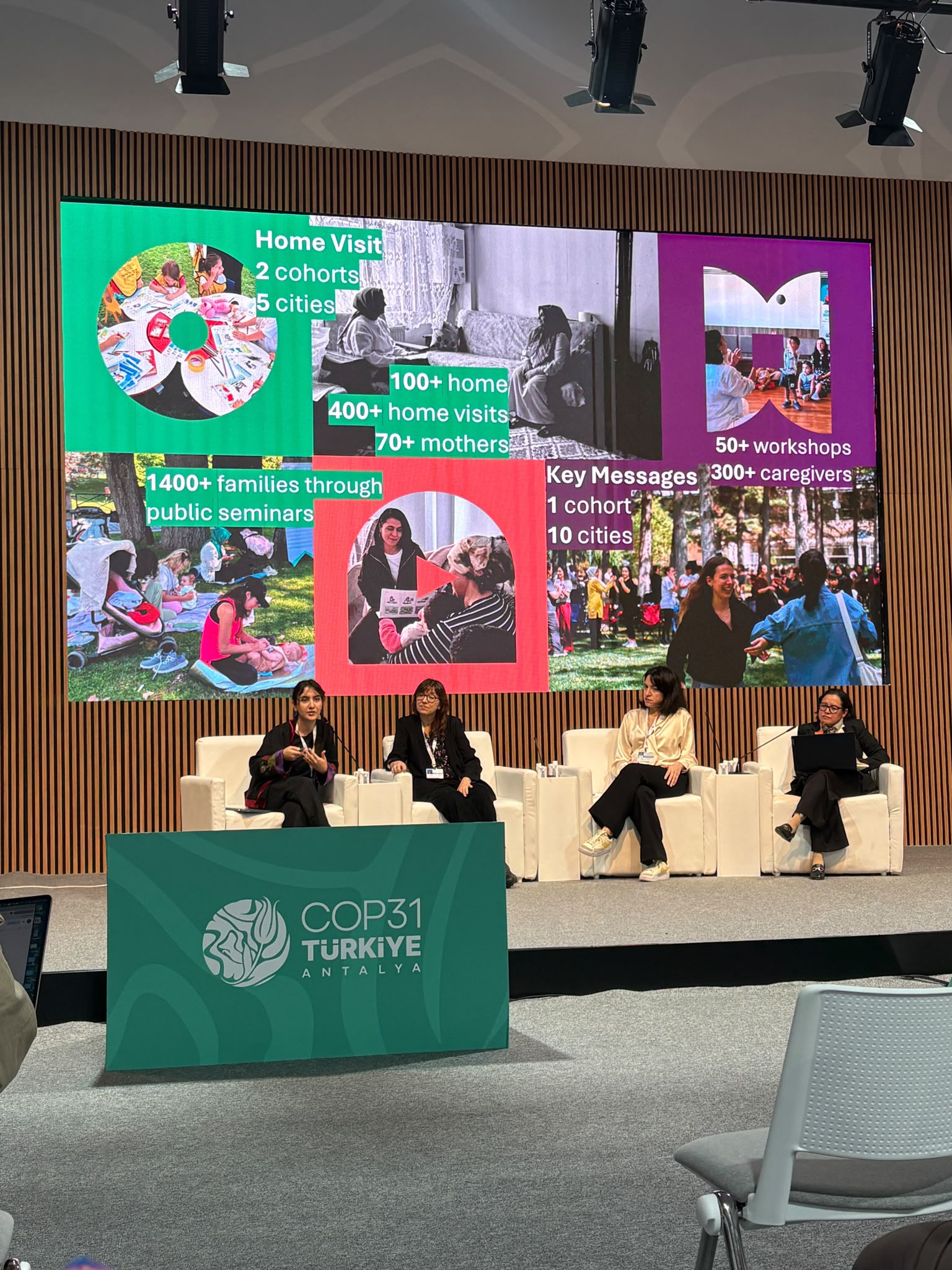
During the session “From Caring Cities to Climate Action: Centering Care in Just Transitions”, organised on 18 November in collaboration with the Global Alliance for Care and the Mother Child Education Foundation (AÇEV), MMU Director of Training and Projects Görsev Argın Uz presented MMU’s programmes focusing on care, early childhood and caregivers.
Argın Uz noted that the Early Childhood in the City programme had reached more than 40 cities, while the Early Childhood at Home programme had facilitated more than 400 home visits across over 10 cities. She also explained that the Reclaiming Streets programme had helped reclaim more than 20,000 square metres of street space from motor vehicles across more than 20 streets in 32 municipalities.
Emphasising that care is not solely the responsibility of social services but an integral component of climate action, Argın Uz stressed that every municipal department should consider how its decisions affect the daily lives of caregivers.
Suna Hanöz-Penney from AÇEV and Ana B. Moreno from the Global Alliance for Care also highlighted the need to integrate care into climate finance and local planning.
MMU Representatives Contributed to Other COP31 Sessions
In addition to the sessions it organised, MMU contributed to various COP31 events through speaker participation.
On 12 November, MMU President and Mayor of Balıkesir Metropolitan Municipality Ahmet Akın spoke at the session “Cities to Seas: Financing a Nature-Positive Future – Urban Biodiversity, Marine Ecosystem Protection and Pollution Prevention”, organised in collaboration with İLBANK and the French Development Agency (AFD) at the Resilient Cities, Buildings and Cooling Pavilion.
Highlighting disparities in municipalities’ access to climate finance, Akın explained how the Sustainable Urban Resilience Financing Facility (SURFF) helps municipalities access financial resources. In his capacity as MMU President, he drew attention to the importance of ensuring that member municipalities with limited financial and technical capacities can also benefit from this mechanism. Stating that “Climate knows no borders”, Akın emphasised the importance of cooperation and international financing in strengthening water infrastructure, promoting water reuse and protecting ecosystems.
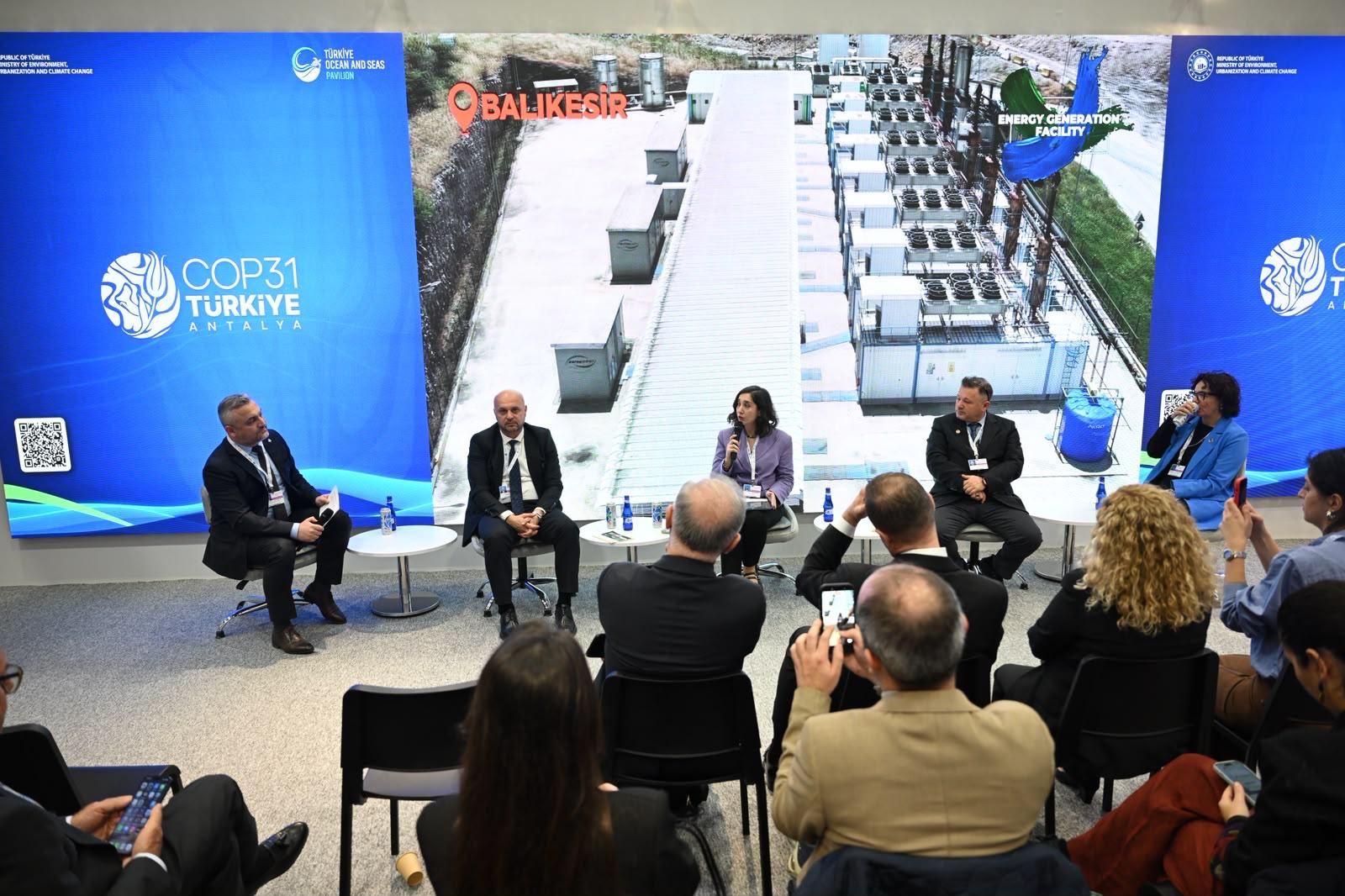
On 10 November, MMU Sustainability and Climate Change Centre Director Merve Ağca represented MMU at the session “Tackling Ghost Nets and Marine Microplastics: Science-Based Coastal Restoration in the Marmara and Aegean Seas”, organised by Balıkesir Metropolitan Municipality at the Türkiye Oceans and Seas Pavilion.
Ağca highlighted the importance of regional cooperation and access to climate finance in protecting the Marmara Sea. Alongside MMU’s awareness-raising activities marking Marmara Sea Day on 8 June and its efforts to monitor the implementation of the Action Plan, she addressed the challenges of land allocation and financing for strengthening advanced biological wastewater treatment infrastructure in cities. She stressed the need to build municipal capacity, develop projects and mobilise financial resources with the support of international development banks.
On 16 November, MMU Director of Training and Projects Görsev Argın Uz participated as a speaker in the UN side event “Water-Smart Solutions for Climate-Resilient Cities: Building Capacity for Local Action”.
On 19 November, Argın Uz shared MMU’s experiences at the session “Love and Regeneration as Infrastructure: Intergenerational Action, Double Literacy and Youth Agency”, organised by Climate KIC and ISMUN at the Türkiye Pavilion in the Green Zone.
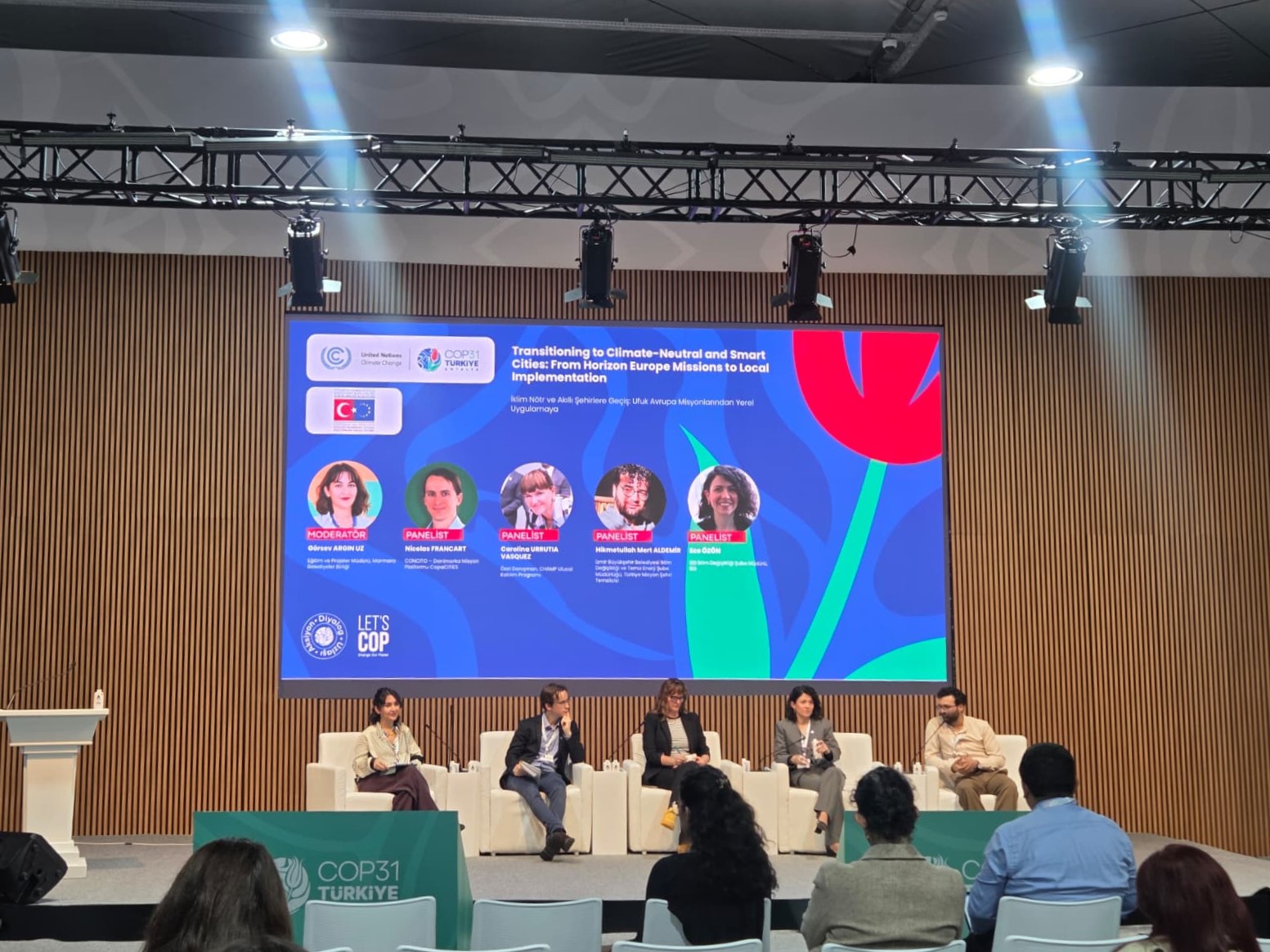
She also contributed to the session “Transitioning to Climate-Neutral and Smart Cities: From Horizon Europe Missions to Local Implementation”, organised by the Directorate for EU Affairs of the Ministry of Foreign Affairs of the Republic of Türkiye on 20 November, sharing approaches developed within the framework of EU Missions and experiences in local implementation.
Through the sessions it organised and its engagement with international stakeholders throughout COP31, MMU sought to strengthen the role of local governments in the development and implementation of climate policies, facilitate the international exchange of local experiences and contribute to the development of new partnerships.
The conclusion of COP31 without an agreement on a comprehensive outcome document once again highlighted the need to follow up on climate decisions and translate commitments into concrete action. The challenges encountered in international negotiations underscored the importance of sustaining climate action across all levels of government.
While key issues requiring global consensus remain unresolved, cities continue to face the impacts of climate change, and local governments remain responsible for developing solutions. With this understanding, MMU will continue to strengthen solidarity among municipalities, address local needs through national and international cooperation, and support the translation of climate targets into tangible outcomes in cities.