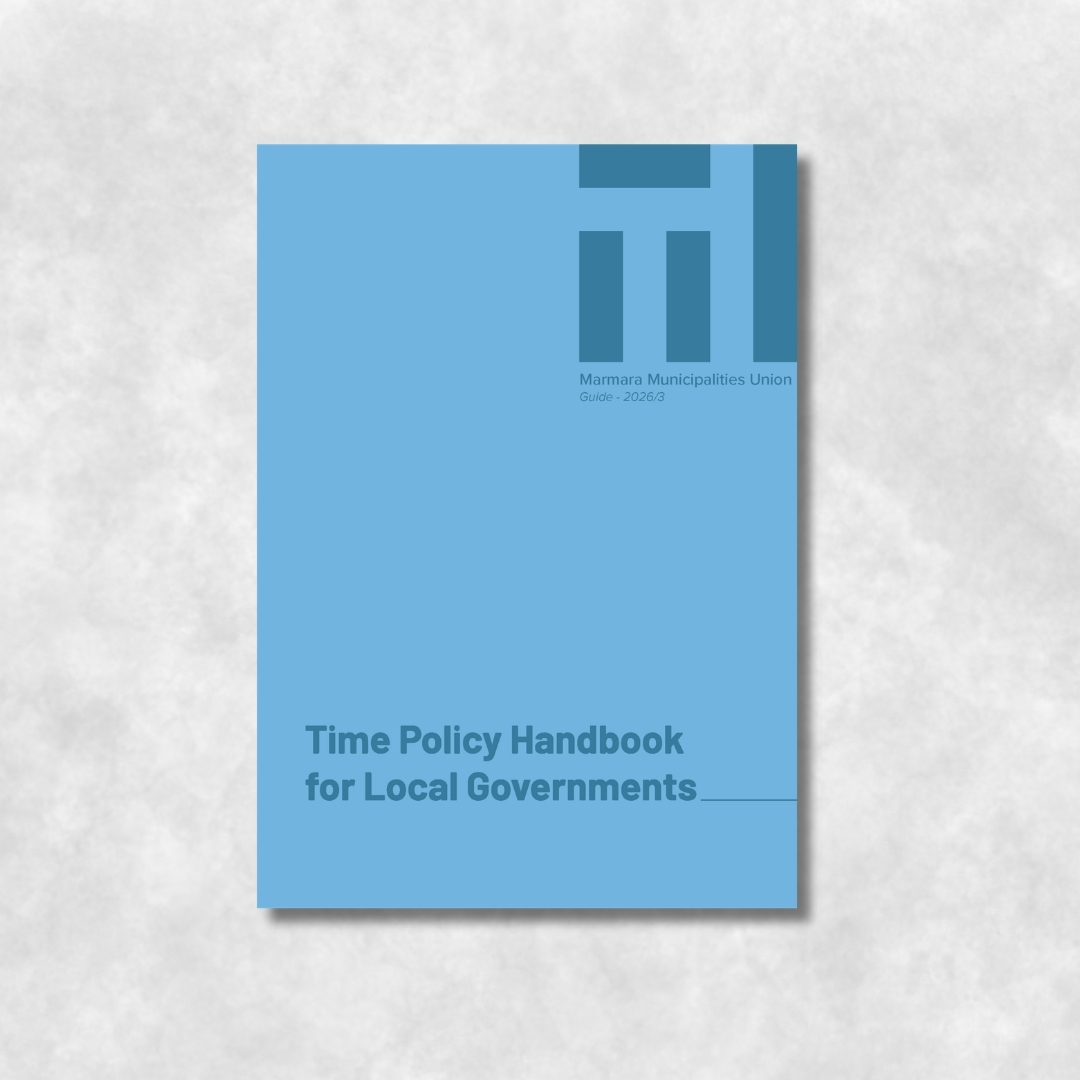

“Time Policy Handbook for Local Governments” Published by MMU
Time is not merely an individual resource to be managed, but also a set of social arrangements that affect the health of individuals and societies, social equality, economic life, and the functioning of cities. In this regard, the fair distribution of time forms part of policies aimed at promoting social well-being.
Time policies such as aligning daily life with biological rhythms, urban planning approaches such as the “15-minute city,” and regulating working hours to ensure decent work directly affect quality of life and the organization of everyday life in cities. Through the services they provide and the policies they develop, local governments also play a role in how time is organized within cities.
Against this backdrop, “Time Policy Handbook for Local Governments” focuses on the role of local governments in the fair organization of time and provides a framework for institutions to develop time policies in line with their own needs and circumstances.
From Time Poverty to Practices Around the World
The handbook includes a glossary of key time policy concepts, assessments of the relationship between care work, gender inequality, and time poverty, as well as global data on time use. It also provides a conceptual framework that local governments can draw on when developing time policies, alongside examples of good practices from around the world.
Designed to make the unequal distribution of time visible and support its fairer organization at the local level, the handbook serves as a reference and practical resource for policymakers, local governments, civil society organizations, and other stakeholders interested in developing time-oriented local policies.
Time Policy Handbook for Local Governments is available on Marmara Municipalities Union Publications website.