Publicness Emerging from the Shadow: New Opportunities of Participation in Cities
By: Savaş Zafer Şahin, Prof. Dr., Head of the Department of Land Registry and Cadastre, Ankara Hacı Bayram Veli University
Cities today are at the centre of a reshaping public life in a period characterised by intertwined economic, social, and environmental crises. Rising inequalities, a fragile social balance, climate-related disasters, accelerating migration currents, and the increasing complexity of spatial organisation are transforming the urban space not only into a living space but also a ground for the re-establishment of political legitimacy, social resilience, and the pursuit of justice. In this context, the phrase "on the shore of all possibilities," proposed by Urban for this issue, suggests that the cities stand at both a threshold of uncertainty and a crossroads where new public possibilities can emerge. The key to exploring this new outlet is not to rely on conventional political tendencies and question leadership perspectives or the structure of the state, but rather to examine examples closer to the experiences of the ordinary people and daily life practices.
In this new era, democracy requires a governance approach that goes far beyond representation. The quality of public life in cities is no longer determined solely by elected administrative actors, but by civic initiatives, specialist communities, neighbourhood- level organisations, digital networks, and voluntary solidarity structures. In other words, the traditional contradiction or interaction between representation and participation is being replaced by a new situation in which the scope of participatory experiences is gradually expanding and creating a space for itself within life with new demands. Interestingly, many examples of this situation are occurring amidst the pessimistic political shifts known as democratic regression. At unexpected times and places, at moments that can be called the lowest points, cities can emerge with surprising examples.
The common characteristic of these examples is that they bear traces of urban life outside of a cycle of daily politics that has become stagnant and reduced to the language of communication and public relations. Urban residents are now striving to leave their mark on the places they live, demonstrating a much greater interest in structural problems while abandoning to see the political as the alternative. This new ethical stance and state of activism, represented by figures like New York's new mayor, Mamdani, points to a new political sphere, and this sphere points out a set of possibilities where participation can have more legitimate characteristics than representation. Therefore, participation has become not merely a political right but a constituent element of the ideal of the fair city. The concept of a "fair city" goes beyond an understanding that prioritises equal access to services, encompassing a broader area from spatial distribution to forms of social encounter, from access to information to a culture of negotiation. A fair city is only possible through the existence of a public order that reduces discrimination in both administrative processes and daily life, makes the voices of different social segments heard, and supports co-production.
In this context, openness, transparency, accountability, data- based thinking, and pluralism are not merely technical principles but the cornerstones of the imagination of a fair city. Every new crisis emerging in the cities reminds us of the vitality of these principles. The increasing number of natural disasters in recent years, especially the digital solidarity networks that emerged after the earthquake, herald a new form of participation in which the citizens emerge not only as demanding actors but also as solution-producing actors. Such examples clearly demonstrate that shadowy areas of public life can become visible and that social capacity can generate extraordinary creative energy in times of crisis. In fact, as urban problems have begun to express an ever-increasing complexity far beyond the one-dimensional and causal procedures of conventional administrative methods, it becomes crucial in a fair city not to standardize existing services or limit representation, but rather to constantly reconsider and transform them, legitimizing them through representative participation.
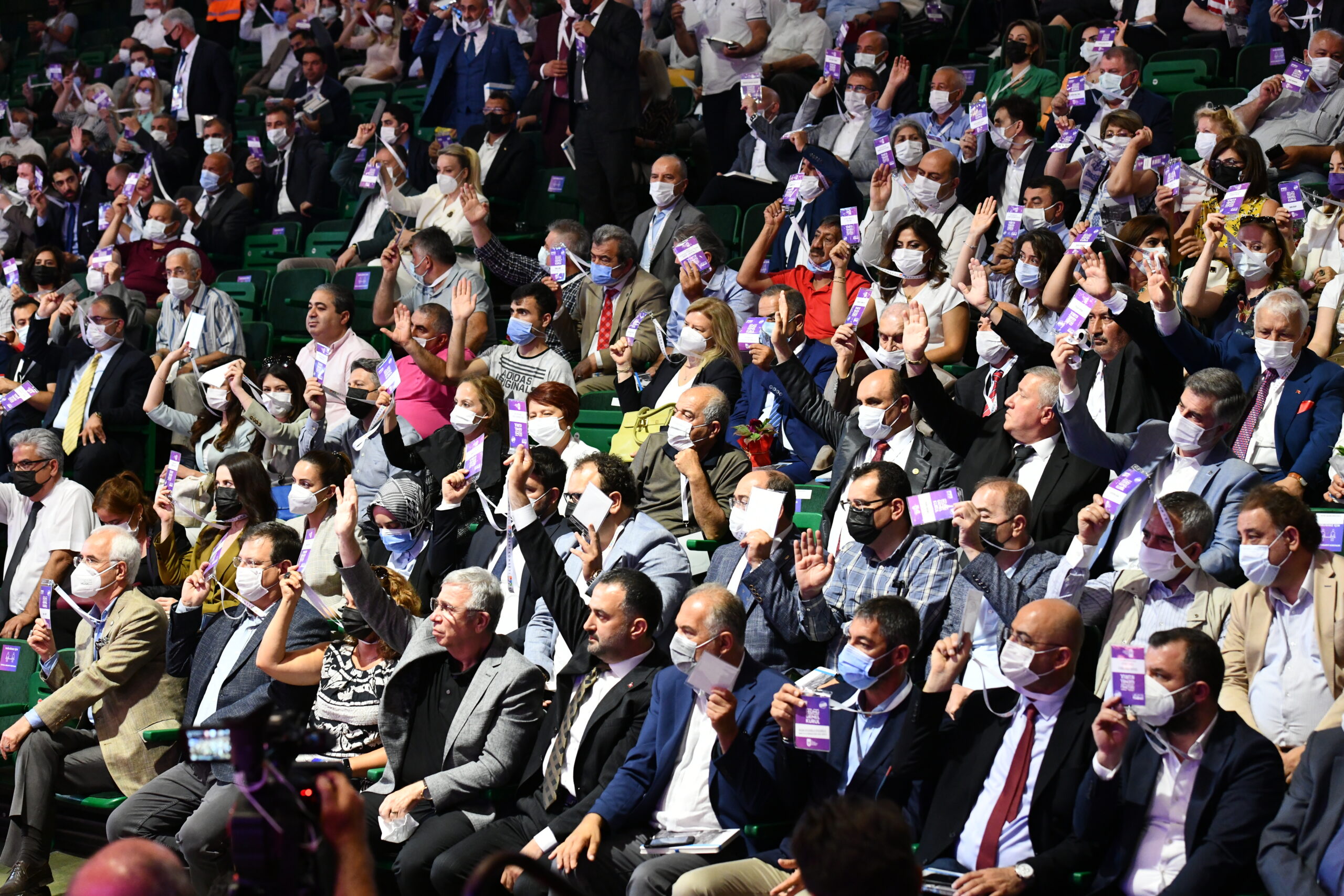
City councils are one of the institutions most significantly affected by this transformation in Türkiye. Essentially a remnant of the global understanding of participation from nearly two decades ago, and having failed to catch up with processes like ordinary participation and digital participation globally, the city councils have created and sustained a crucial opportunity for Türkiye by creating a neutral space outside of politics. These structures, which have sometimes been ineffective and sometimes overshadowed by the political climate in Türkiye, have demonstrated, especially in recent years, that they can create a powerful space for negotiation and encounter when the right conditions arise. City councils offer a public ground where diverse civic actors, as well as broad representation, can come together to discuss common issues, rebuild trust, and make social energy visible. For example, the expanding component structure of the Ankara City Council stands out as an exceptional case in Türkiye. The experience emerging here demonstrates that participation is not merely an administrative process but a cultural and political way of doing things.
New participation practices in cities where city councils are partially engaged are now transcending the boundaries of face-to-face meetings; new interaction models are emerging through digital platforms, open data ecosystems, crowdsourcing applications, and networks that bring together diverse areas of expertise. These models can be effective both in times of crisis and in solving daily urban problems where classical bureaucratic mechanisms fall short. Expanding participation also makes cities' demands for justice visible through different channels. Thus, the fair city is becoming not just a spatial goal but a political medium powered by deepening participation. However, it cannot be ignored that this medium is constantly threatened by the existing political sphere.
Therefore, the "on the shore of all possibilities" signifies the shore of a new public imagination rather than a state of fragility for the cities. This imagination points to an order that transcends crises of legitimacy, openly addresses social inequalities, and includes diverse segments of society in the say, authority, and decision-making processes surrounding urban life. The steps toward this order, some based on scientific research and some based on participatory experiences, that have emerged in Ankara, Istanbul, and Izmir in recent years, have yielded concrete counterparts. These examples, which prioritise transparency, strengthen collective wisdom, and bring diverse components of urban life together around the same table, demonstrate that the ideal of a fair city is not merely a theoretical debate but it is also practically possible.
Today, the cities in Türkiye are being tested by institutional challenges, while simultaneously harbouring a vast potential that allows for a new democratic beginning. To make his potential visible depends on strengthening overshadowed public spaces, ensuring the continuity of solidarity practices, and transforming participation from an instrumental technique into a lasting governance culture. Strengthening mechanisms such as the city councils, supporting collective production, and empowering diverse segments of society to have a say will all be the steps that materialise the ideal of a fair city.
In conclusion, "publicness emerging from the shadow" describes a new opportunity for the future of the cities in Türkiye today. This opportunity will become a reality to the extent that all components of the city can establish inclusive and transformative relationships based on mutual trust. However, both the representation of social interests, the redesign of urban administrative mechanics, the continuous transformation of services, and the linking of all these to the new dimension of participation have become an indispensable requirement. A fair city is only possible through the sustainability of the integrity of these relationships. The future of the cities depends entirely on the quality, breadth, and continuity of these encounters.
The fifth edition of Urban, the compilation issue of the magazine Kent published by Marmara Municipalities Union with the motto “Cities Developing Solutions”, is now available.
You can download the entire magazine by clicking here.