
Beyond Numbers, Towards People: Role of Demographıc Data in Inclusive Local Planning Processes
By: Mehmet Doğu Karakaya
At First Glance
When addressing the issues about population, three fundamental components should be taken into consideration: birth, death and migration.
We are all born only once, at the very beginning of life; most often beyond our control, at an uncertain moment, we meet death only once, “just as every soul tasted death”. However, migration is an extremely dynamic and decisive factor that can be undertaken multiple times throughout one's life, at any age, either voluntarily or involuntarily and under non-controlled and compulsory circumstances, to multiple destinations, often irreversible and relatively more difficult to measure and define. Humanity and the human population as part of natüre will continue to respond to all developments in the future, as it has in the past, in line with the different aspects of these three components.
Historically, gradual advances from high fertility and high death conditions to low death conditions and then, low fertility conditions are called “demographic transition”. Modernisation, urbanisation, and positive developments in health and hygiene conditions, resulted in serious decline in the rate of death and increase in life expectancy at birth. For this reason, since we stay alive much longer compared to the past, we may say that there is an obvious acceleration in population increase. However, the preferences of people for low fertility levels that they developed as a response to such feasible life conditions show a much slower transformation. There is a rapid population increase, then a slowing increase and then, depending on the developments, the processes of a decreasing population size. This situation leads to significant differences among the countries and continents, leaving some ahead and others behind. The transformation is continuing, and it is possible to foresee that this process will be experienced in different regions at different rates and durations but similarly.
There has been a transition from generations who mostly came into this world with more siblings, where a significant proportion of their siblings passed away before reaching the age of one, into generations with far fewer siblings, lower fertility rates, better mortality conditions, and longer, more prosperous lives. On the other hand, we have reached a population structure continues to increase because of population momentum.
In addition, it is obvious that the phenomenon of migration, as the fastest and effective demographic reaction, will continue to change our world.
Today, when the world’s population passed 8 billion, the past and future of the demographic transformations must be reevaluated. Increasing diversity and aging populations, the extent that the social policies influence demographic behaviour, the lowest limit that fertility may drop and the impact of age structure on the population increase constitute the primary subjects of debate. How the possible negative impact of population increase on sustainable development might be differentiated, how the inter-generational support systems would be restructured and to what extent the societies and cities become individual-friendly come to the fore as critical questions. It is not possible to cover such a broad topic in a single text. The priority here is for the reader to gain greater literacy and awareness.
Spirit of the Times
While you are reading this text with an average reading time of 5-10 minutes, the world doesn’t stop and time continues to flow. All of us continue our life journeys, advancing over 45-degree lines, at different generations of ages and genders, over the two-dimensional Lexis diagram, where time is the x-axis and age is the y-axis. In these few minutes, newborns are added to the world’s population, and some individuals have lost their lives and have left us, and of course there are some who have changed their locations. We, as the survivors, are now aged few more minutes.
Maybe today is the birthday of some of us. At the same time, according to the life tables, one of the basic demographic and actuarial tools, we are celebrating the fact that we completed the current year by surviving and being in the numerator of the survival ratio. We blow out the candles with the hope of having the same celebration next year.
Cui Bono?
When looked at the global angle, as an increasingly growing crowded world society, we must be together in the context of equality and sustainability and advance to more common goals. Within thin framework, there is the possibility to make the invisible visible, to transform the process into an advantage. It is up to us to materialise this potential. It is important to read the demographic data well in terms of not misleading demographic discourse and public perceptions and highlighting inclusiveness as much as possible. In terms of well understanding the population dynamics regarding the technical and social-economic interactions and meet them with social and local policies, and for whose sake and how the current findings will be used, local administrations have great responsibilities, like all individuals.
In other words, the increase in population should be seen not as a cause but as a result, and the future should be planned collectively for everyone. It is important to address all common problems and issues altogether by focusing more on development, rather than comparing the countries or places of settlement only according to their income levels. All areas of services from waste management to access to health services, from gender equality to better housing and shelter opportunities to all, from sustainable cities to rural areas, from preservation of ecologic life to safe food, from clean energy to high-quality education and transport, are in interaction with each other. Topics such as inter-generational support systems and aging populations are increasingly coming to the forefront clearly.
Since development, especially development at the local level, is not a concept that can be materialised with a “copy-paste” method, it is crucial to consider the fact that every region and society has its specific dynamics, powerful and vulnerable sides. To give an example, reading well the migration movement of the people who spent a long part of their lives in Istanbul’s dense urban environment and when aged, returned to their birthplaces in the rural regions of the Eastern Black Sea and identify themselves as the People of Black Sea by both of the local administrations will pave the way for improvements in the life qualities of such people.
As another example, although the proportion of the elderly population in Türkiye has remained low for many years, the fact that the discussions on this issue have always focused on proportional expressions has overlooked the fact that, in terms of numerical population size, Türkiye’s elderly population is larger than the total population of many countries in the world. And this situation may cause the awareness of the required social policies to be delayed.
On the Shore of Which Possibilities?
As it is seen, addressing the issue of population requires presenting multi-directional perspectives and consider it from an analytical manner. Demography is the compass of inclusive urban policies and depends on well understanding who lives where and in which conditions and making an efficient service plan. At the same time, this will enhance participatory and data-based planning.
The fact that people are living longer and having fewer children are the two fundamental reasons for the aforementioned demographic transformation is a social achievement as the indicator of an improvement of the healthy living conditions. In order to make this achievement as productive as possible, the current values should be redefined. In this sense, the local policymakers should very well analyse and read the demographic structure of the population that they serve. Demography is a strategic guide in the local planning processes.
It encompasses a wide spectrum, from the amount of the drinking and utility water we use to traffic services, the construction industry, public transportation, health centres, the justice system, ethnic issues, the width of the sewer pipes, the type of fuel used in cars, the construction of dams, mineral reserves, violence against women, local administration policies, political elections, and the percentage of women represented in the parliament. Restrictions in one region can be presented as incentives in another. Perceptions in one society can be vastly different from those in another. All these differences are influenced by the transformations the world is undergoing.
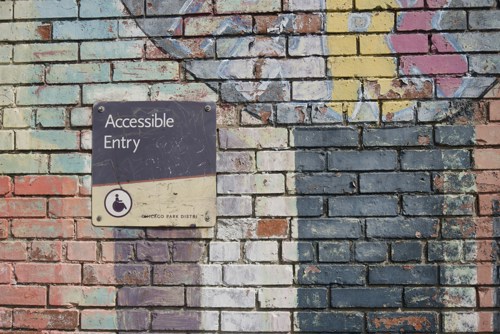
To combat the risk of a poorer and more deprived old age, wellplanned eldercare services, prioritising health and accessibility- based investments, for instance, encouraging elevator-equipped or ground-floor housing for the elderly, have become increasingly important. Prioritising infrastructure investments focused on accessible transportation, childcare services, employment opportunities for young people, sports, education, and technology centres, is crucial. To define and understand the migrant population effectively, and to alleviate language and social integration barriers must be aimed.
The use of population and household projections, now indispensable and routine tools for every local administration, will enable budget planning and investment priorities for urban infrastructure projects to be set on a scientific basis. This will contribute to the development of long-term sustainability, resilience, and climate adaptation policies. For example, the need for new schools, parks, or public transportation lines can be determined based on the average population growth rate and its age and gender distribution. This will allow for a more equitable distribution of resources based on need.

The fact that women biologically are living an average of five years longer than men, coupled with the fact that the average age of marriage is 4-5 years higher for men, means that in the future, there will be more elderly women living alone than men, and on average, they will spend 10 years alone. Planning for elderly services should prioritise the poverty and vulnerability of single elderly women. Furthermore, there is undoubtedly a significant population group that is 80-85 years old and whose children are in the 60-65 age group. Local service planning can be informed by these and dozens of other indicators.
A good assessment of the relationship between technological innovations and production capacity and population growth, the efficient use of artificial intelligence tools to produce solutions compatible with demographic transformation, a good understanding of their impact on the labour market, and productivity planning will bring us the best of what is currently possible.
Population growth changes identity as we go down to the sub-regions, and as especially the young working-age population leaves their location through migration, the issue of a decrease in population (“depopulation”) may come to the fore. In this sense, carefully examining local population decline processes and taking measures to improve quality of life should become important agenda items soon.
Increasing the activities of “urban observatories”, improving access to data and activating data ecosystems, and carrying out capacity building activities for the effective use of spatial analysis and geographic information systems should be put on the agenda.
Those Who Cannot Die in Their Birthplaces
During a recent travel break, I had seen two separate buses of a metropolitan municipality carrying corpses in coffins in their trunks and relatives of the deceased in their seats, to two different provinces in Türkiye. This was a municipal service that usually involved burying the deceased in their hometowns upon request.
Of course, the world was not just composed of those who, like in Ömer Zülfü Livaneli's poem "Those Who Died Where They Were Born," do not know the weariness of the road and closed their eyes where they began life. Life, a cycle that begins in the earth and ends in the earth. Meanwhile, humanity migrates...
One of the buses in question was going to Trabzon, the other to Batman…
The fifth edition of Urban, the compilation issue of the magazine Kent published by Marmara Municipalities Union with the motto “Cities Developing Solutions”, is now available.
You can download the entire magazine by clicking here.