
Artificial Intelligence Gap: A New Era of Inequality in Our Cities
By: Emre Eren Korkmaz, Dr, Oxford University
Introduction: Those Who Fly at Fibre Speed and Those Who Wait for a Signal
Internet access opportunities in Türkiye now reaches almost everyone. This achievement indicates that the years-long battle over infrastructure-has been largely secured. However, while this high level of access is a cause for celebration, the global technological momentum has radically redefined the concept of digital inequality. Today, the issue is not accessing the Internet but the capacity to integrate with the global economic system and to create productivity by using it.
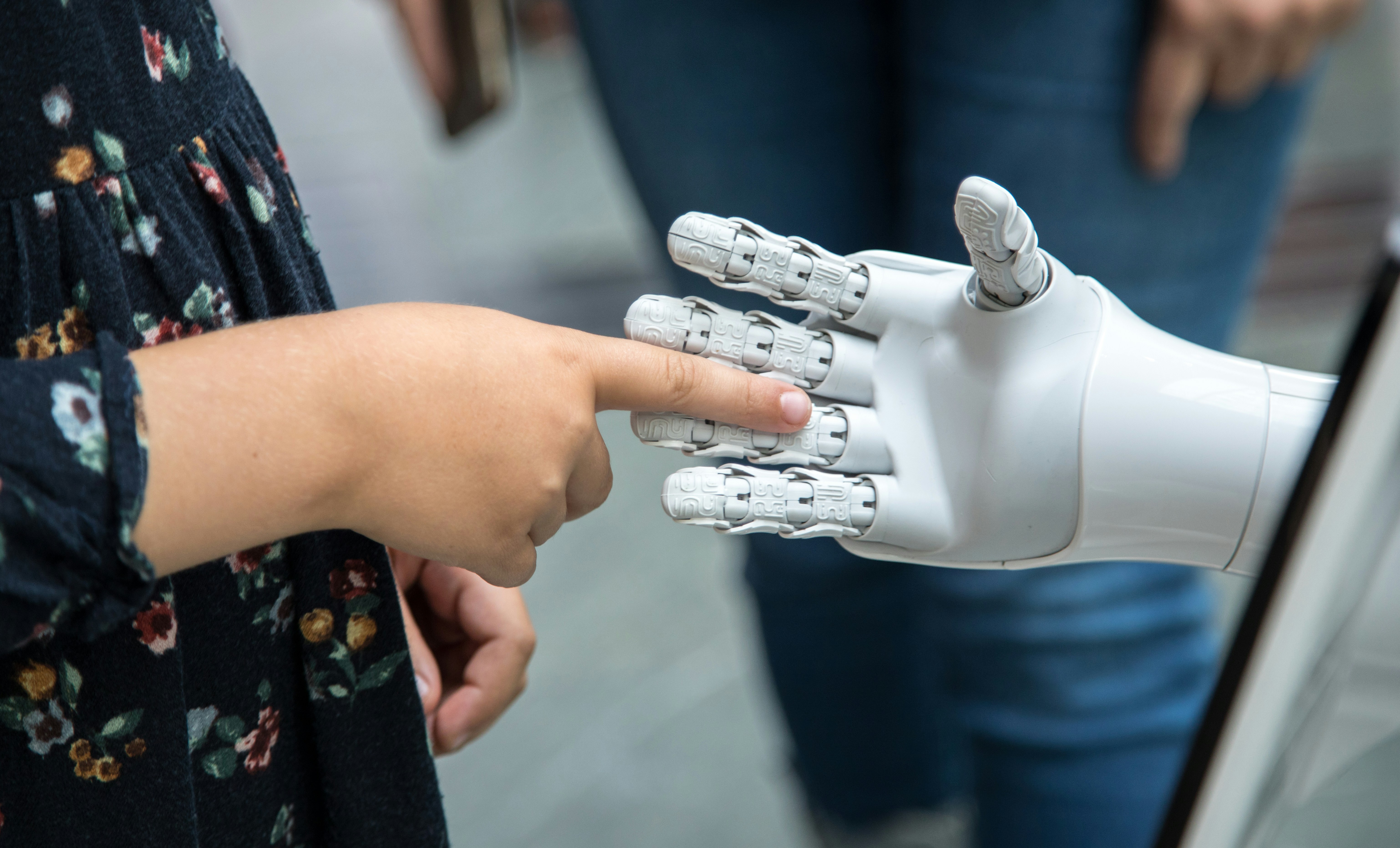
Dazzling developments in the field of Artificial Intelligence (AI) and its sub-heading, the Large Language Models (LLM) (and also in the related fields of robotics and digital domains), create a new and deep gap in our cities. On one side, there is a professional, who makes instant complex analyses, takes part in global business meetings without experiencing any translation problems and doubles their productivity with the AI-powered phone in their pocket. On the other hand, there is the local shopkeeper or worker who lives in the poor areas of the same city, works in low-skilled jobs and confronts the risk of losing their job security under AI-based automation pressure. Here, on the one hand, we have the issue of access to such opportunities, and on the other hand, there is a serious discrepancy between the aims and capacities of using it even if such opportunities are accessed. We live in an unequal society, and digital inequalities magnify existing inequalities.
The local administrations must consider this new generation of inequality (Digital Inequality 3.0) as a primary urban issue.
1. AI Momentum and Depth of Inequality
This new stage of digital inequality has gone beyond the problems related to the lack of physical Access (1.0) or basic computer-using skills (2.0). Today’s problem is the discrepancy in the capacity to achieve economic and social results by using the technology. Thus, tasks such as bringing Wi-Fi to the villages or training the youth in the area of coding are not sufficient anymore, even though they are still relevant.
The speed and deregulated nature of the progress in the field of artificial intelligence is deepening this gap. The AI patents has increased 31 times since 2010, and between 2021-2022, they increased by 62.7% in a single year.
A great part of this progress is led by the private sector (51 important models in 2023) which is optimised in order to maximise profitability. Here, we are also faced with a new picture. While infrastructural investments and access to the Internet are public tasks, now the role of the public sector has been weakened, and the private companies among the actors who create and develop the latest technologies have gained importance. And a big part of these companies is of foreign origin and enjoys monopolistic positions. This circumstance further complicates bargaining and collaboration with these organisations. Another reason for this is that these companies prioritise accountability to their investors and shareholders over the public.
This private sector-oriented momentum causes a technological panorama in which the AI tools further strengthen the individuals who already have resources and power, instead of social benefits. Additionally, automation and unemployment are among the issues that the social units of the local administrations should carefully monitor. This has the potential of triggering urban poverty.
Also, barriers of local language and culture make up significant obstacles. If the AI tools are optimised in English or for high-skill business flows, this will make the adaptation of the local economic actors more difficult. On the other hand, even though the language problem has been overcome, it is difficult for a shopkeeper to enjoy such opportunities and use them for developing their job.
Certainly, this does not mean negative results will emerge all the time. For instance, there are plastic companies which, thanks to AI, examine the biodegradable products, get access to them and supply new products, as demanded by their customers. In another example, a vast number of talented young people who can create their cultural and creative production with lower budgets, thanks to AI, can supply their cultural and creative products in a more efficient way to broader segments. Thus, the local administrations have important roles in assessing and supporting these new opportunities.
2. Access Opportunities and Aims of Use
The users in our country are at high levels in terms of using and adapting to digital technologies. However, the research shows that this is rather limited with a passive information-receiving process. For instance, using the e-government services, following the social media or uses for information receiving are significant. The main problem here is issues such as digital literacy and precautions against manipulation and fake news.
However, competency in complex problem solving, data analysis or using productive applications required by the era of artificial intelligence is not yet extent. While the people stay in a position of passive consumers, the gap with active digital producers and innovators grows fast.
Furthermore, digital inequality is spatially deepening since urban resources are not distributed equally. While the unequal lives of the post-immigration groups who settle in the city also continue in the digital field, resource discrepancies between the central and peripheral areas prove the existence of social, economic and cultural barriers that trigger digital inequality. The opportunities presented by AI can be efficiently utilized, and efforts for closing this gap can be carried out thanks to effective interventions of the local administrations in this field.
3. Critical Intervention of Local Administrations
The local administrations cannot anymore be content with the role of mere infrastructural providers in the face of this urban problem. Intervention is obligatory for the sake of spatial justice and economic stability. The local administrations must turn artificial intelligence into a “means of public transport” that can be used by all, instead of being a “luxurious vehicle”. And this requires a comprehensive strategy based on three pillars:
Smart Infrastructure and Inclusive Platforms (Diagnosis and Targeting)
Instead of only estimating digital inequality, we must clearly diagnose it in spatial terms, with artificial intelligence. Conventional data might be sparse and expensive. It is possible to map poverty, infrastructural problems and urban quality by using AI algorithms and satellite images. And this will legitimise leading the resource distribution to the spots where resource inequality is the deepest. Also, e-Municipality services should adapt the principle of “Equity by Design” with user experience (UX) tests for disadvantaged groups.
The local administrations may use the budget and time saved over those who use e-municipality services for providing more efficient services to the disadvantaged segments.
Advanced Competency and Digital Citizenship (Training and Culture)
Training should focus on the principal elements of the ethical use of LLMs, struggles with data pollution, cybersecurity and digital citizenship. For the AI to become a “public good”, the municipal libraries, youth centres and occupational high-schools should be turned into access centres open to the public where AI can be used by all. Special, culturally and linguistically sensitive programmes should be developed for individuals with low digital literacy (elders, parents).
Here, training municipal personnel especially for protecting the data collected from living individuals, taking measures against the cyber-attacks and preventing the employees who have the most vulnerable positions about the cyber- attacks from being deceived have considerable significance.
Political Intervention and Equality-Focused AI (Local Economic Integration)
The local administrations should intervene directly in order to increase the competitiveness of the small and medium-sized enterprises. AI integration programmes for the chambers of the artisans and local producers should contain AI consulting services that overcome the Turkish language barrier, and provide local marketing and translation solutions.
Also, the big data collected by the municipality should be used, focusing on social benefits. For instance, by using AI algorithms, social service (housing or good aid) distribution may target those groups that need the most and have the least access. Advanced competency and retraining support should be provided for the labour force in the sectors under the risk of automation through municipal occupational highschools and courses.
Conclusion
Digital inequality is an active crisis that threatens urban sustainability, social justice and economic diversity. The rapid advancement of artificial intelligence technologies has the potential to deepen this divide. If this technological acceleration benefits only the wealthy, it will exacerbate existing injustices for the rest of society.
The leadership that is expected from the local administrations cannot be anymore restricted with providing infrastructure. It should focus on developing strategic competency, establishing inclusive platforms and carrying political interventions focusing on economic results. Considering artificial intelligence as a “public good” and making our local organisations the engine of this transformation is the only way to make our cities more just, more resilient and more inclusive. Othetrwise, while some continue to fly at fibre speed, a great mass will be left behind waiting for a signal. This strategic task is a shared responsibility for all of us.
The fifth edition of Urban, the compilation issue of the magazine Kent published by Marmara Municipalities Union with the motto “Cities Developing Solutions”, is now available.
You can download the entire magazine by clicking here.